
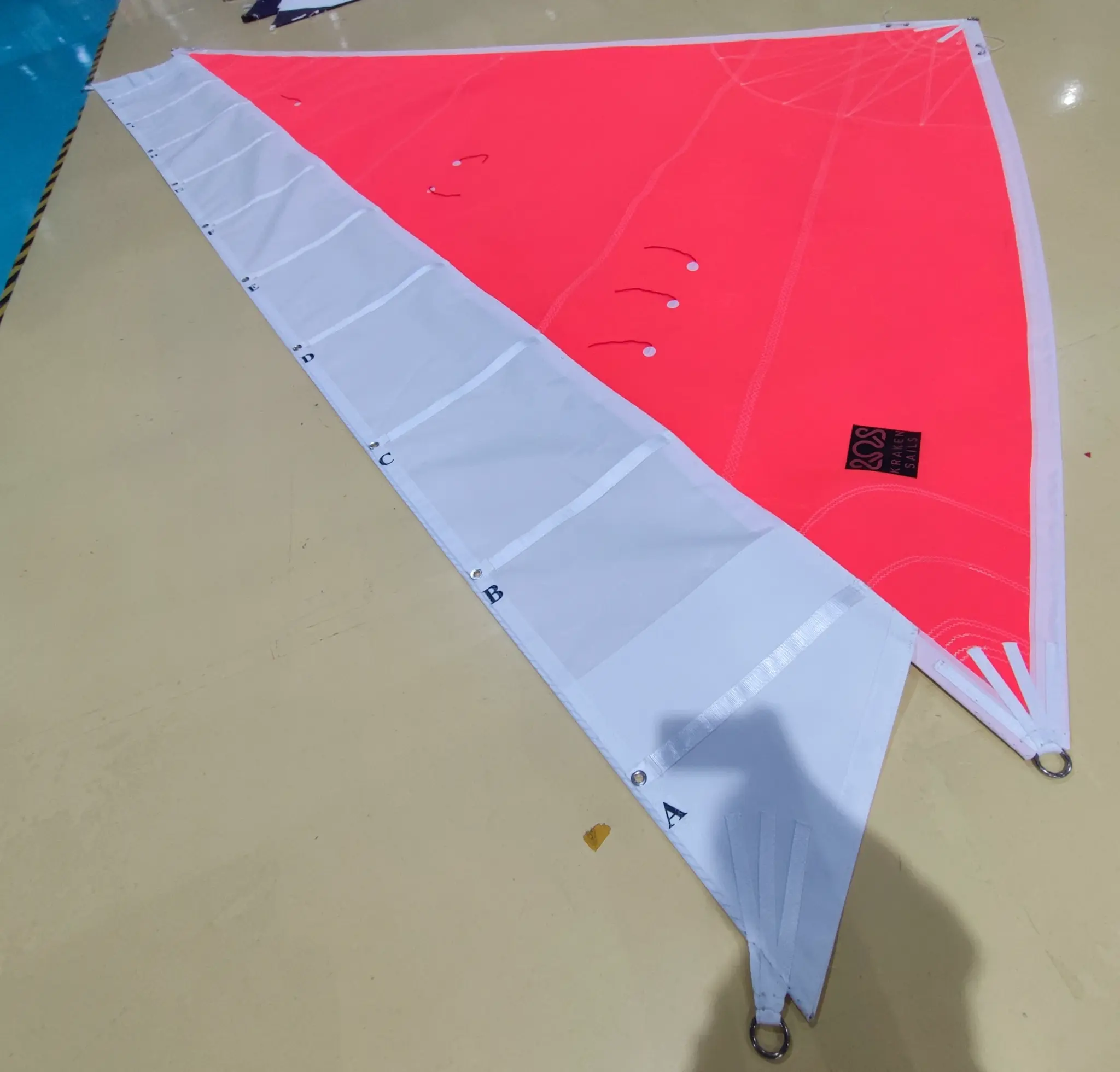
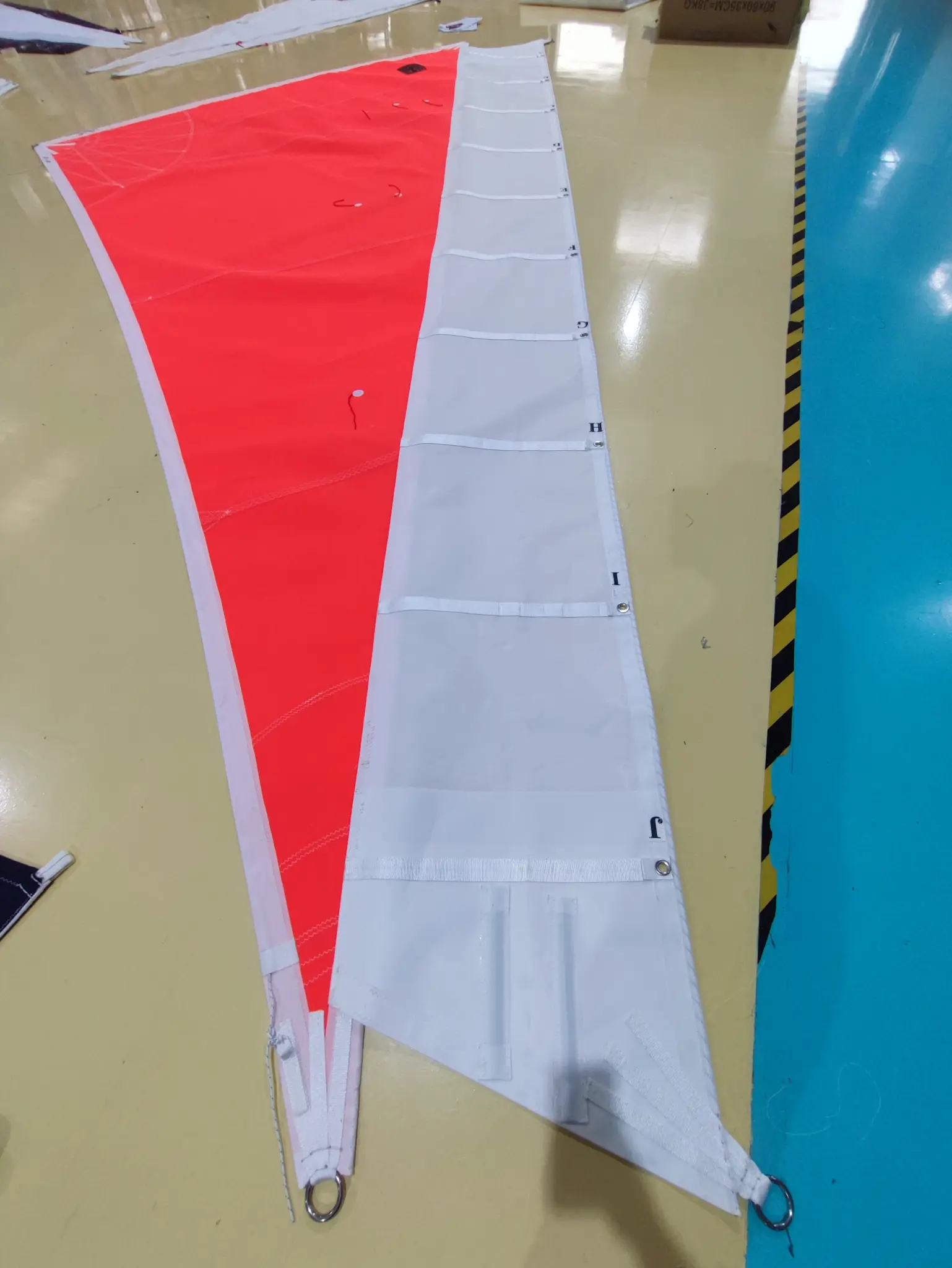
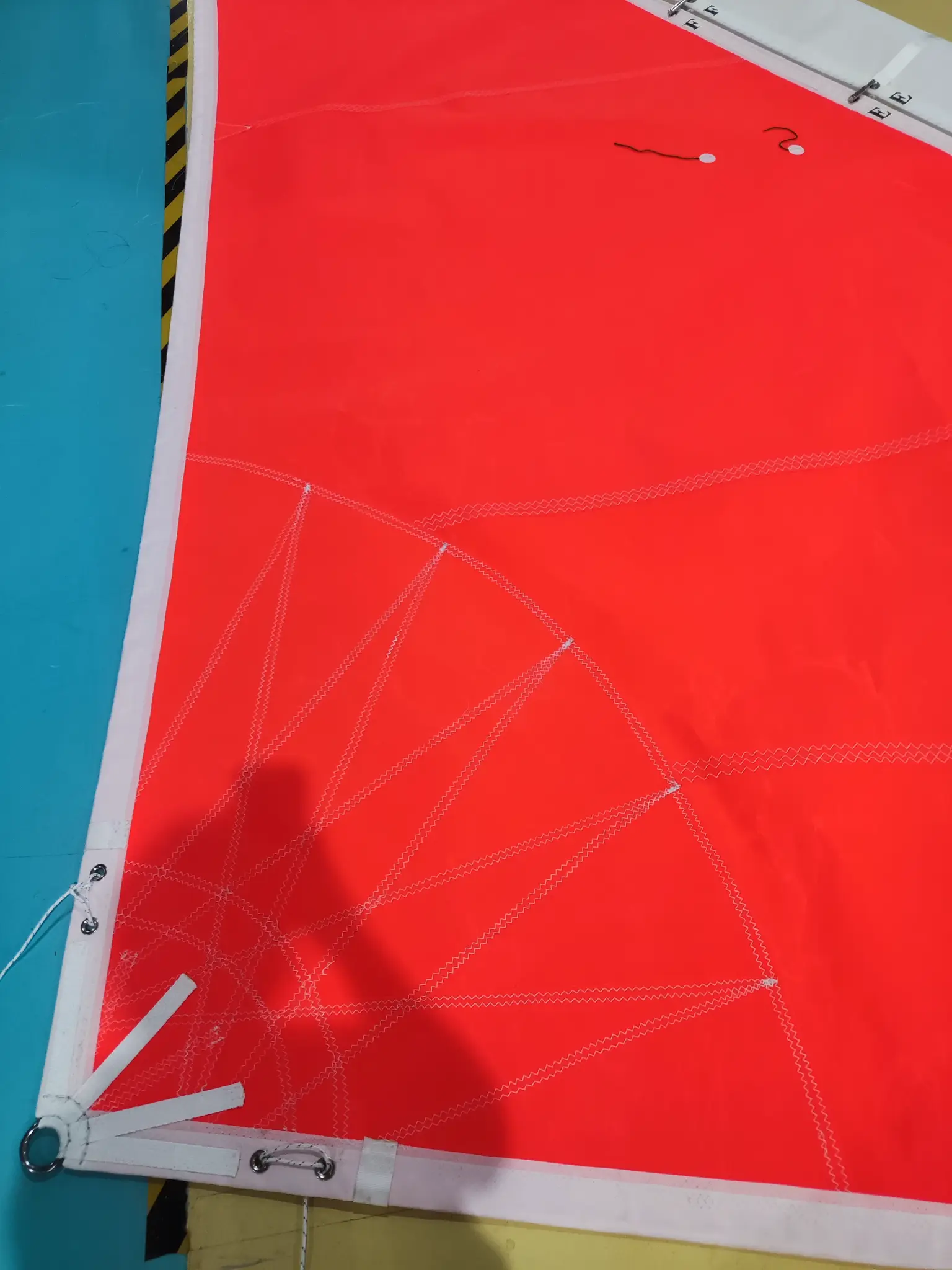
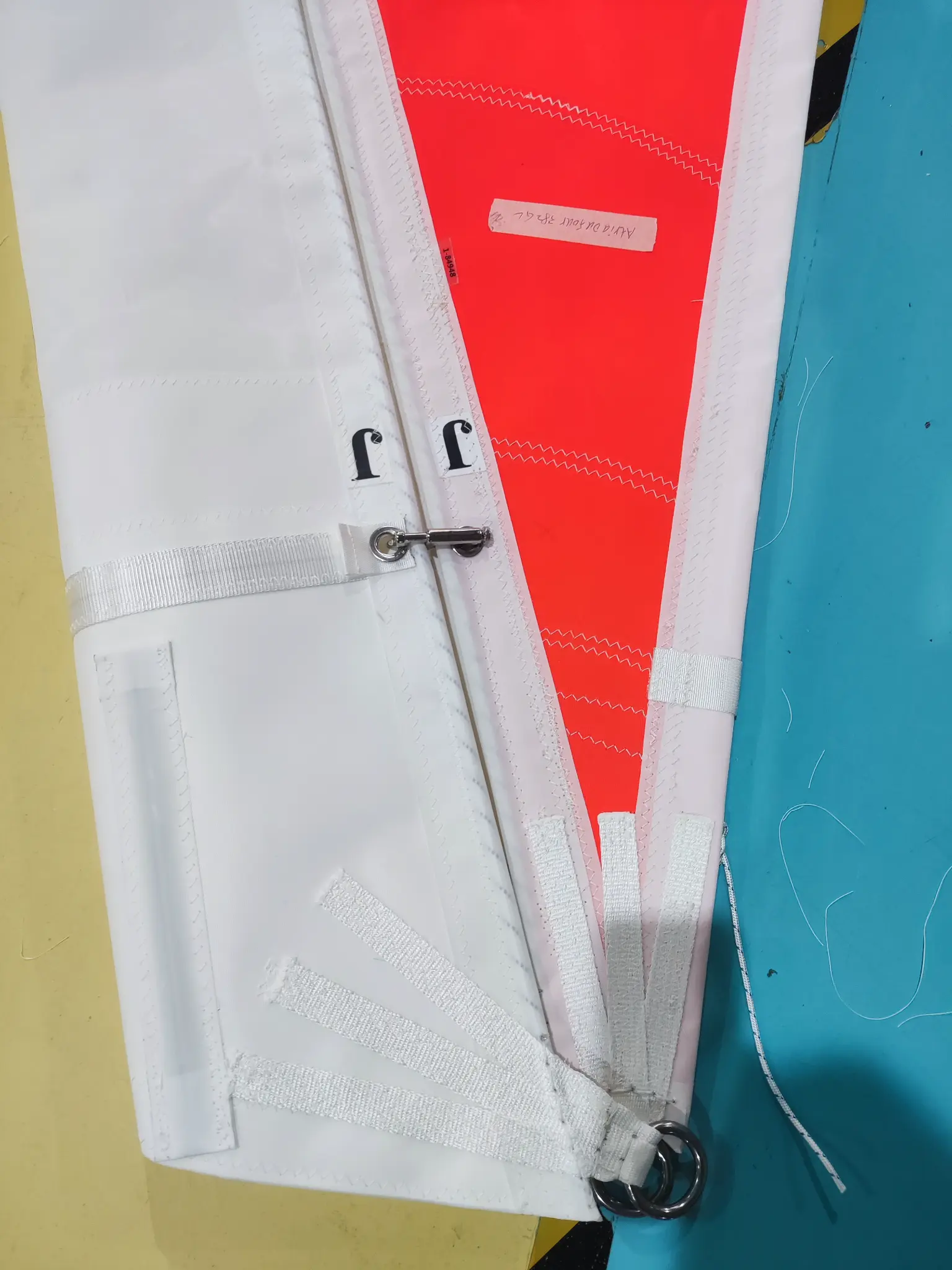
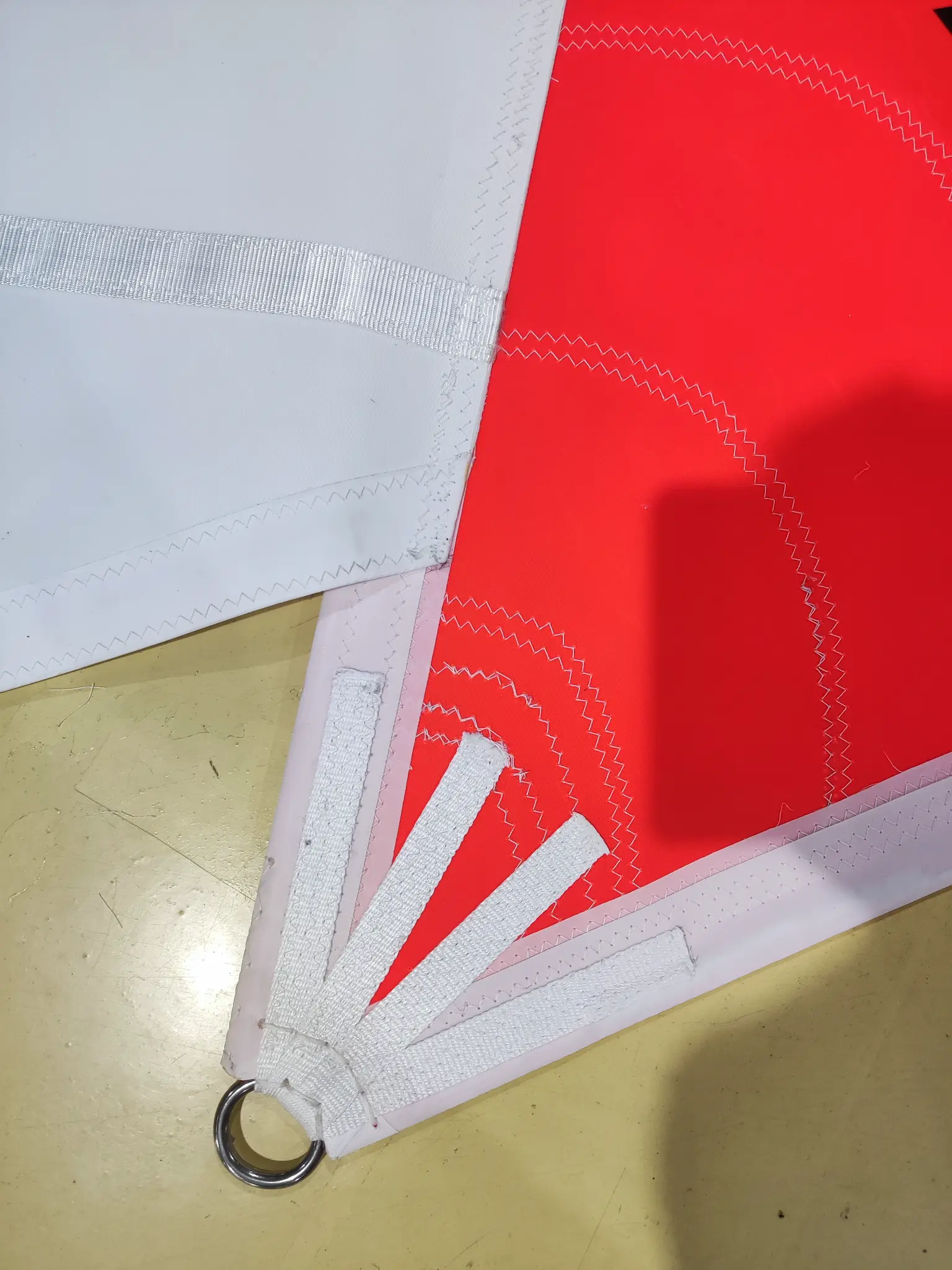
Storm Jib
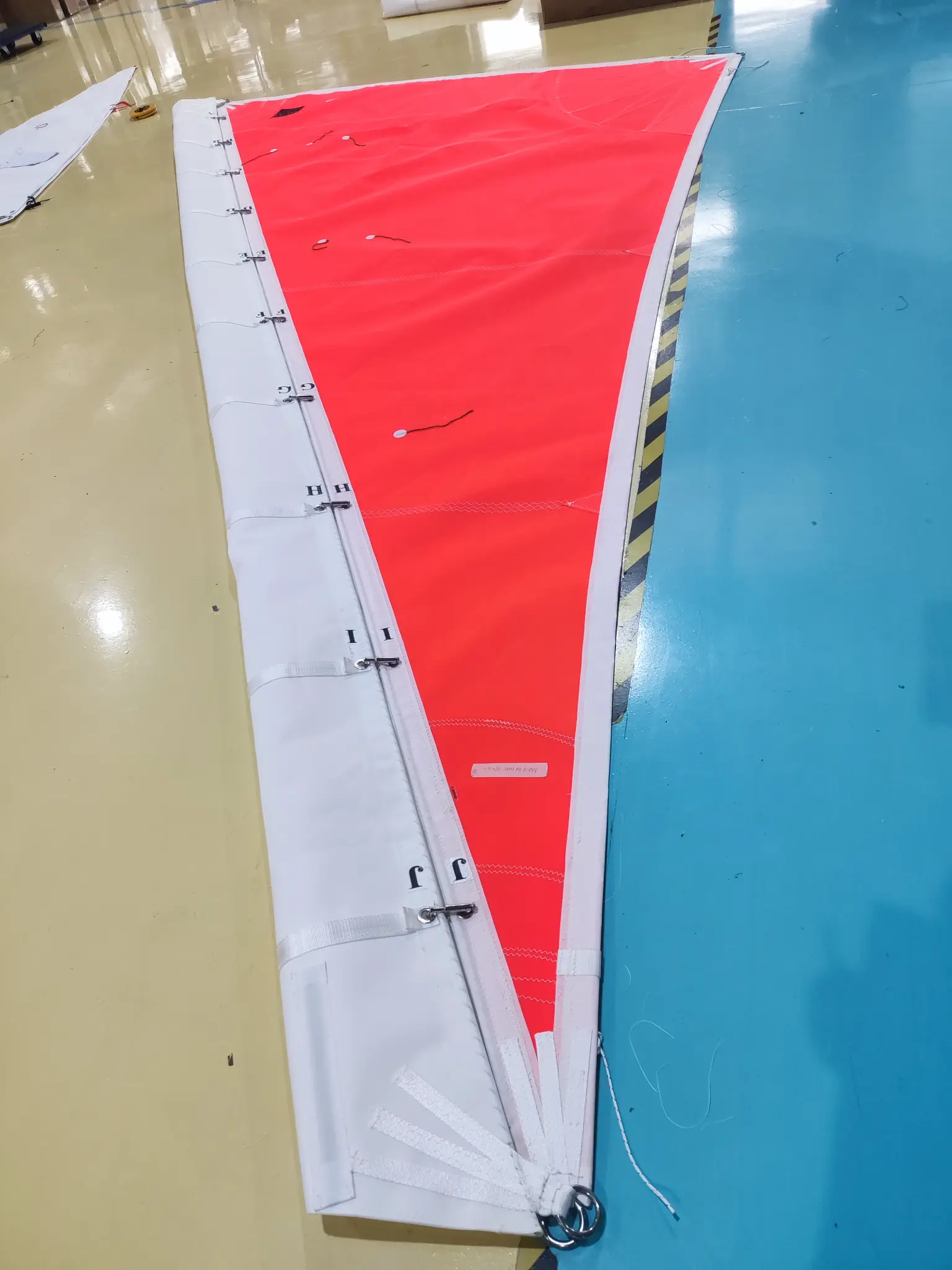
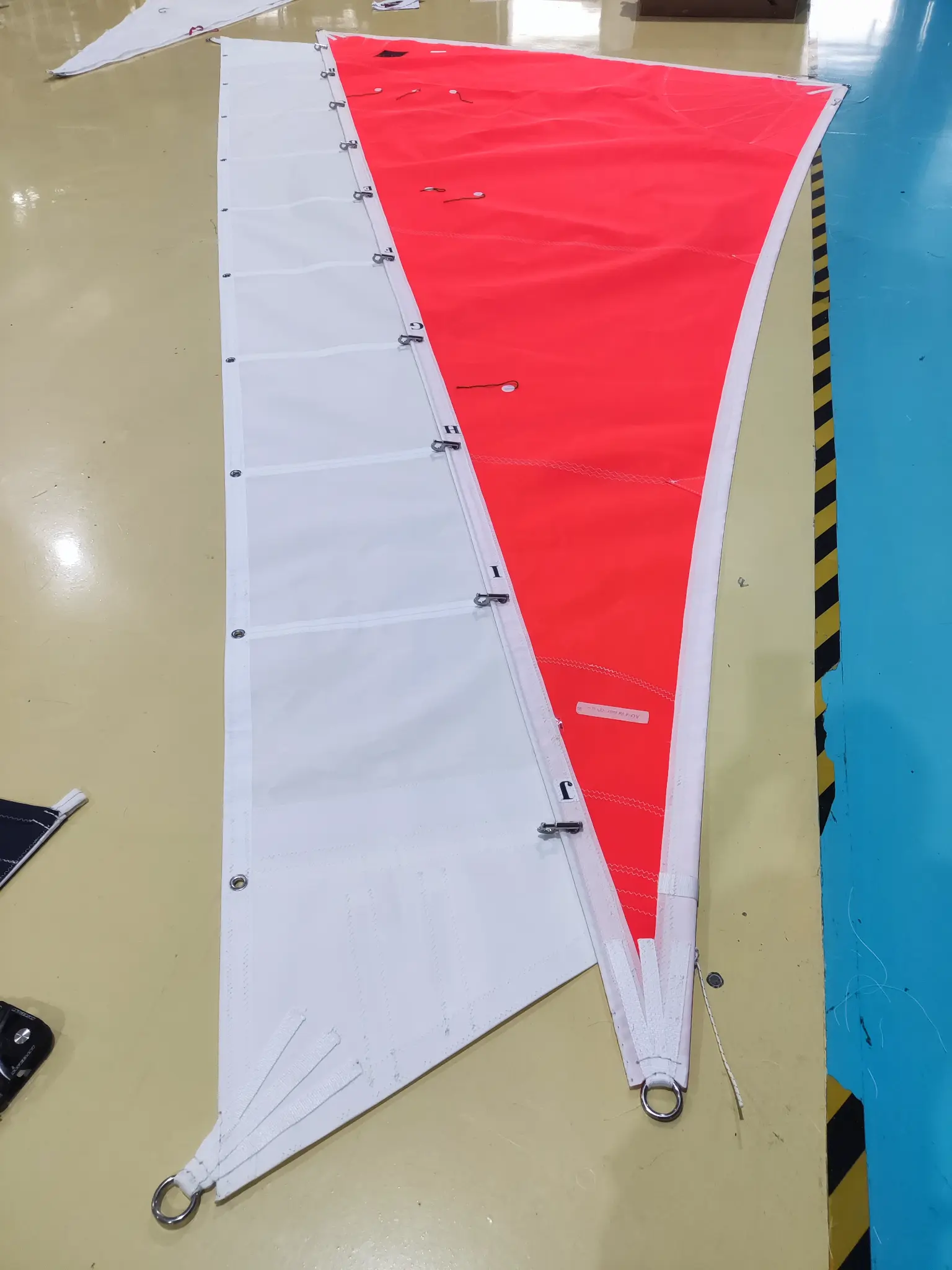
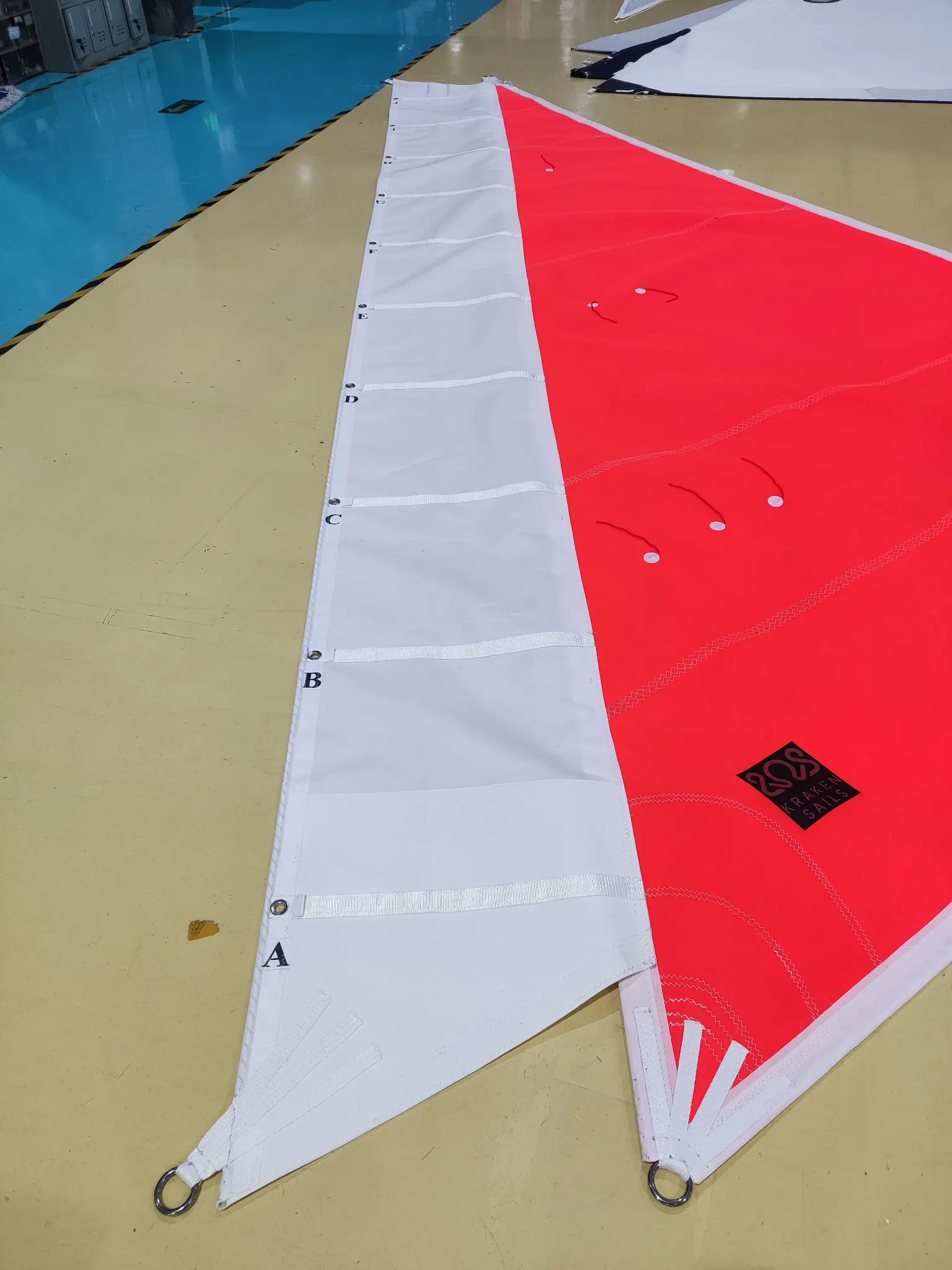
Heavy-weather storm jib built from Challenge Storm Orange Dacron, a high-visibility orange woven sailcloth. Cross-cut construction.
Available Sizes
| Size | Luff | Leech | Foot | Area | Min I for OSR |
|---|---|---|---|---|---|
| Extra Small | 3.95 m | 3.00 m | 2.05 m | 3.0 m² | 7.75 m |
| Small | 4.75 m | 3.70 m | 2.40 m | 4.5 m² | 9.49 m |
| Medium | 5.45 m | 4.20 m | 2.72 m | 5.7 m² | 10.68 m |
| Large | 6.10 m | 4.82 m | 3.05 m | 7.5 m² | 12.25 m |
| Extra Large | 6.90 m | 5.50 m | 3.45 m | 9.5 m² | 13.78 m |
| Maxi | 7.80 m | 6.10 m | 3.90 m | 12.0 m² | 15.49 m |
Min I is the smallest foretriangle height (I) at which that size stays within the OSR storm jib limits: area no more than 5% of I², and luff no more than 65% of I. Use the storm jib calculator to check your size.
Luff Attachment Options
- Hanks — hanks onto a wire forestay or inner stay. Meets the OSR luff-attachment rule.
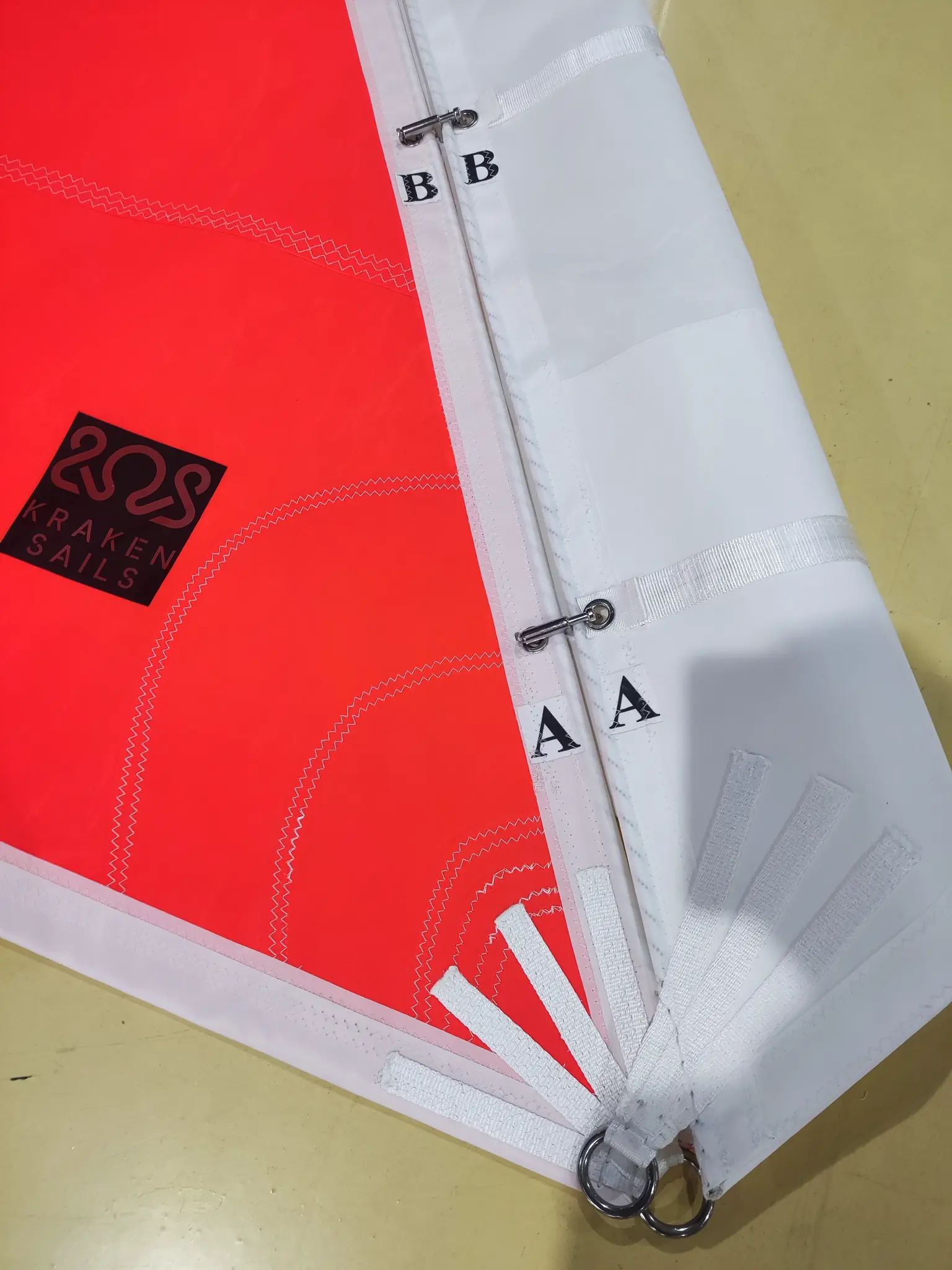
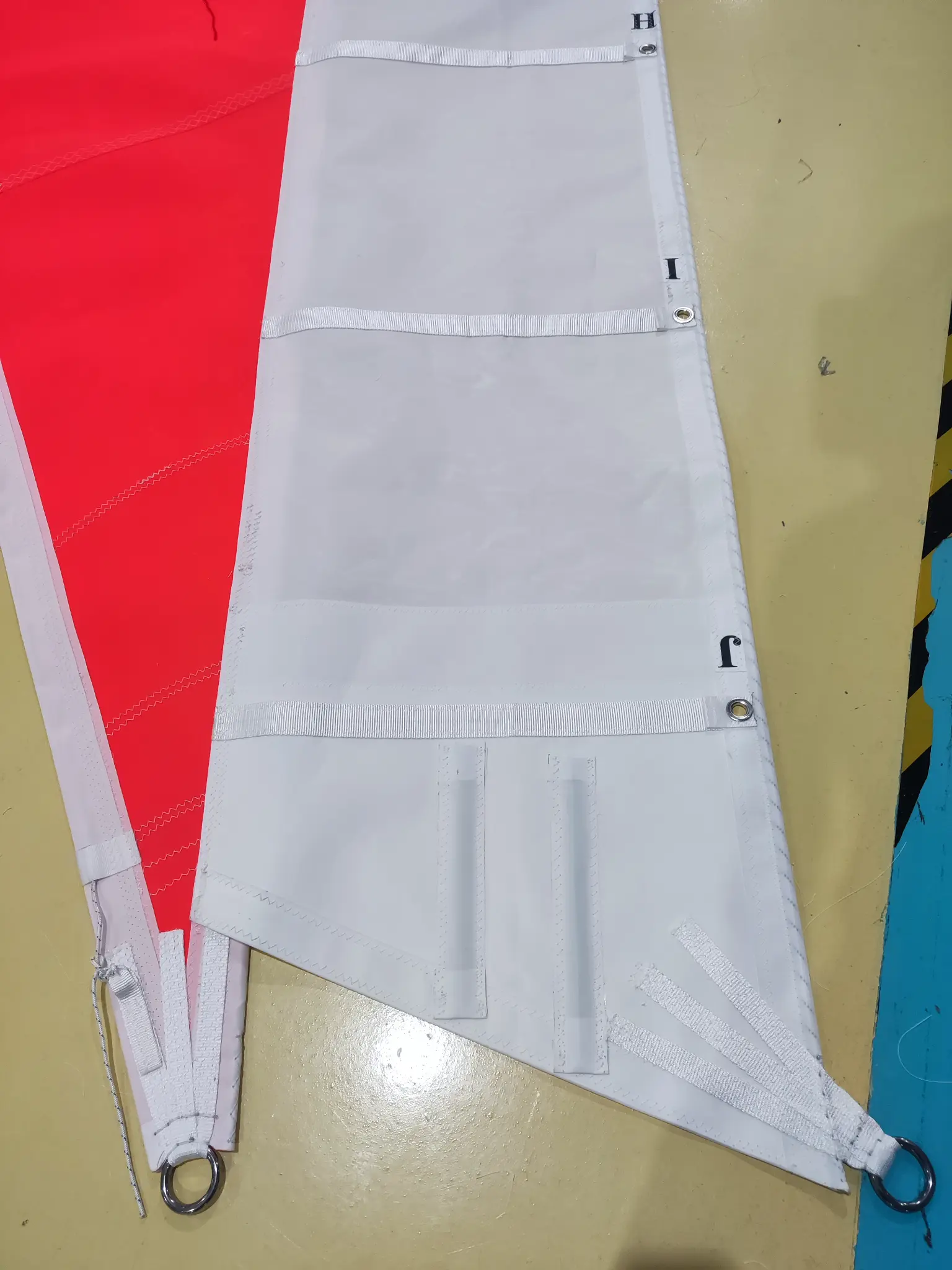
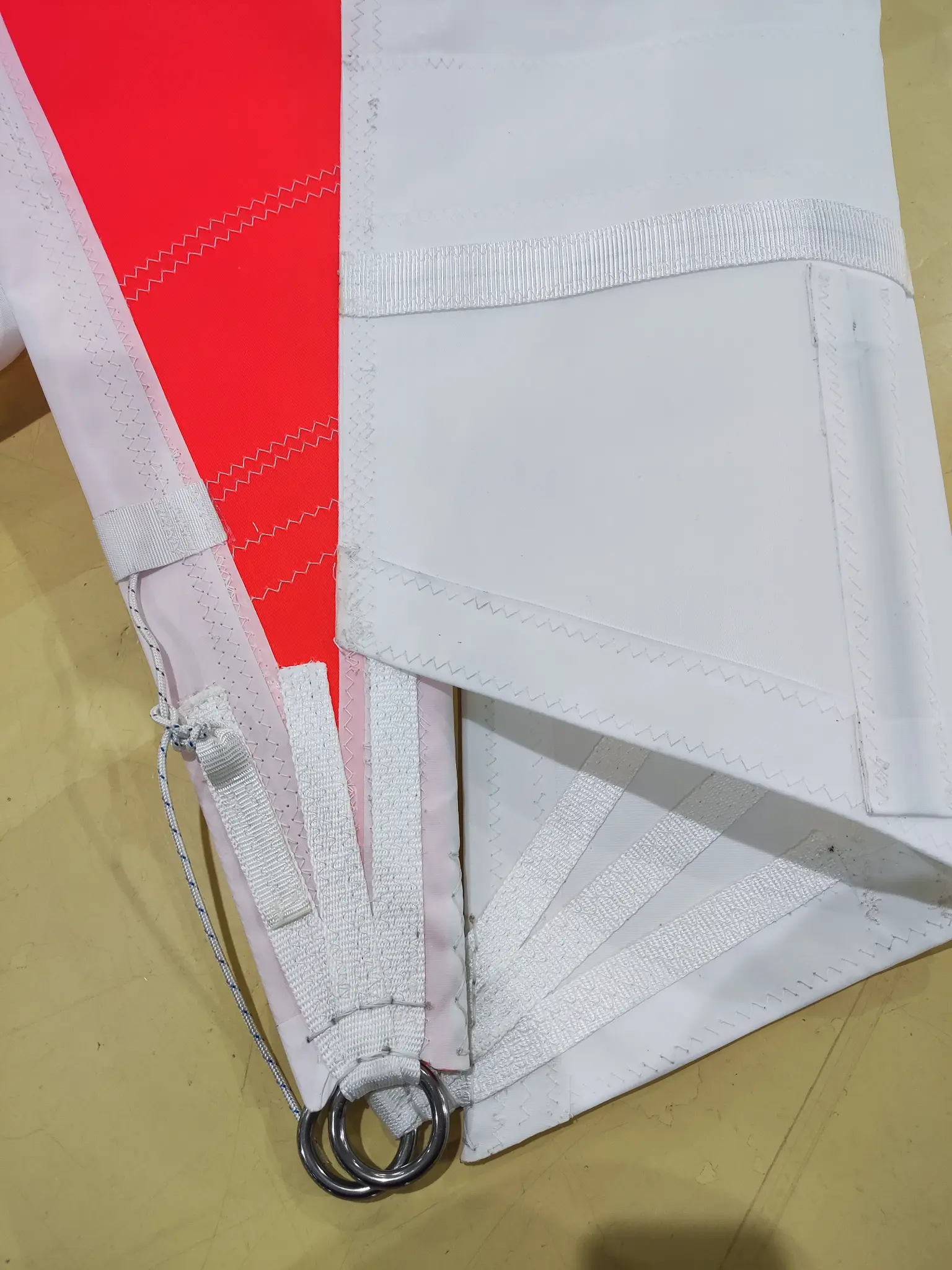
- Wrap Luff — a luff sleeve that wraps around the forestay, including over a furled headsail. Meets the OSR luff-attachment rule. Recommended for cruisers with furling genoas.
- Luff Tape — a luff tape that feeds into a foil or furler groove. Also pick luff tape if you’d like soft buckles fitted. Luff tape relies on a foil, so it does not meet the OSR luff-attachment rule. It suits coastal or training use.
Material
- Extra Small & Small: Challenge Storm Orange 325 g/m²
- Medium through Maxi: Challenge Storm Orange 415 g/m²
Compliance
Built to the storm jib requirements of World Sailing Offshore Special Regulations 4.26: high-visibility storm orange cloth, no battens, and sized within the OSR area and luff limits for the minimum I shown above. OSR 4.26 also requires a method of attaching the sail to the stay that does not rely on a luff groove or foil. Choose Hanks or Wrap Luff if you need an OSR-compliant storm jib. Check your event’s notice of race for which offshore categories require one.
A$422.40 – A$1,531.20Price range: A$422.40 through A$1,531.20
You might also need
Sizing Tool
Storm Jib Calculator
Enter your boat’s foretriangle height (the I measurement from your class certificate or sail plan) and we’ll calculate the maximum OSR-compliant storm jib dimensions and suggest the right size from our range.
Where to find your I measurement:
Your boat's I dimension is the vertical height of the foretriangle — measured from the deck at the base of the forestay to the forestay attachment point on the mast. It's on your class measurement certificate, your sail plan, or your one-design class rules.
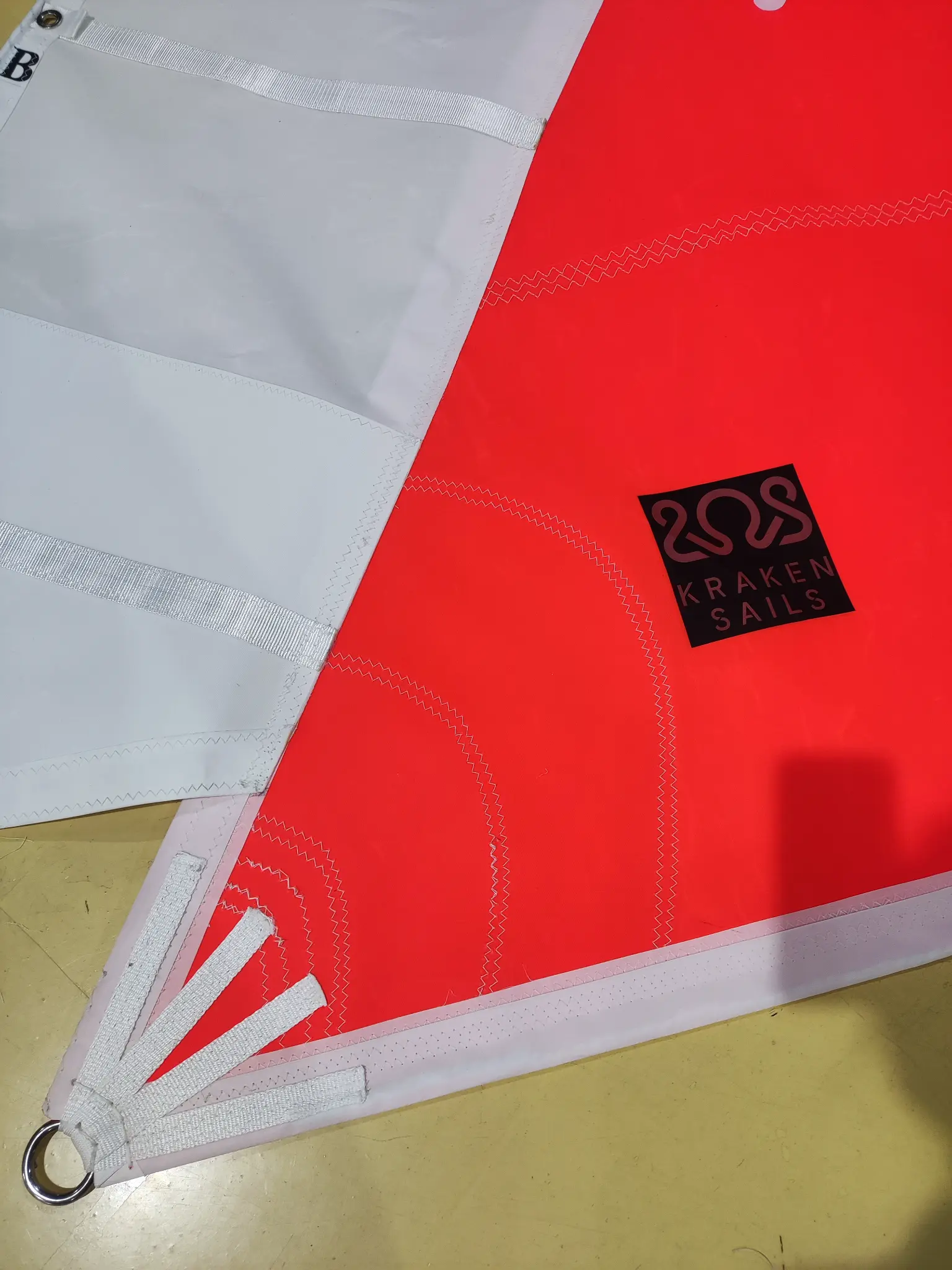
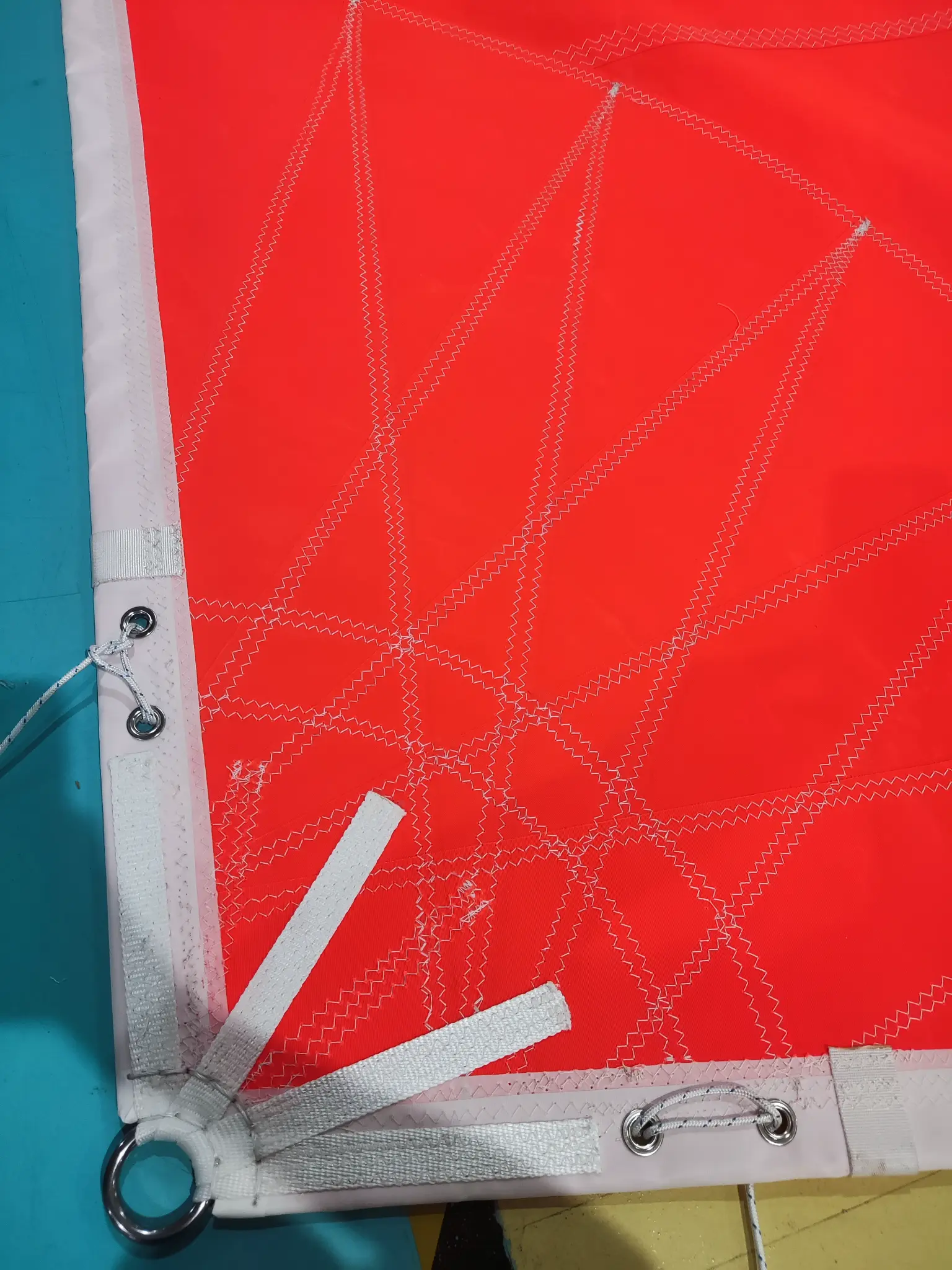
Construction Detail
Designed for When It Matters
Our storm jibs are designed to the storm jib requirements of World Sailing Offshore Special Regulations 4.26: OSR size limits, high-visibility colour, no battens and, with Hanks or Wrap Luff, a luff attachment that doesn’t rely on the furler. The right piece of safety equipment for any offshore passage, racing or cruising.
High-Vis Dayglo Fabric
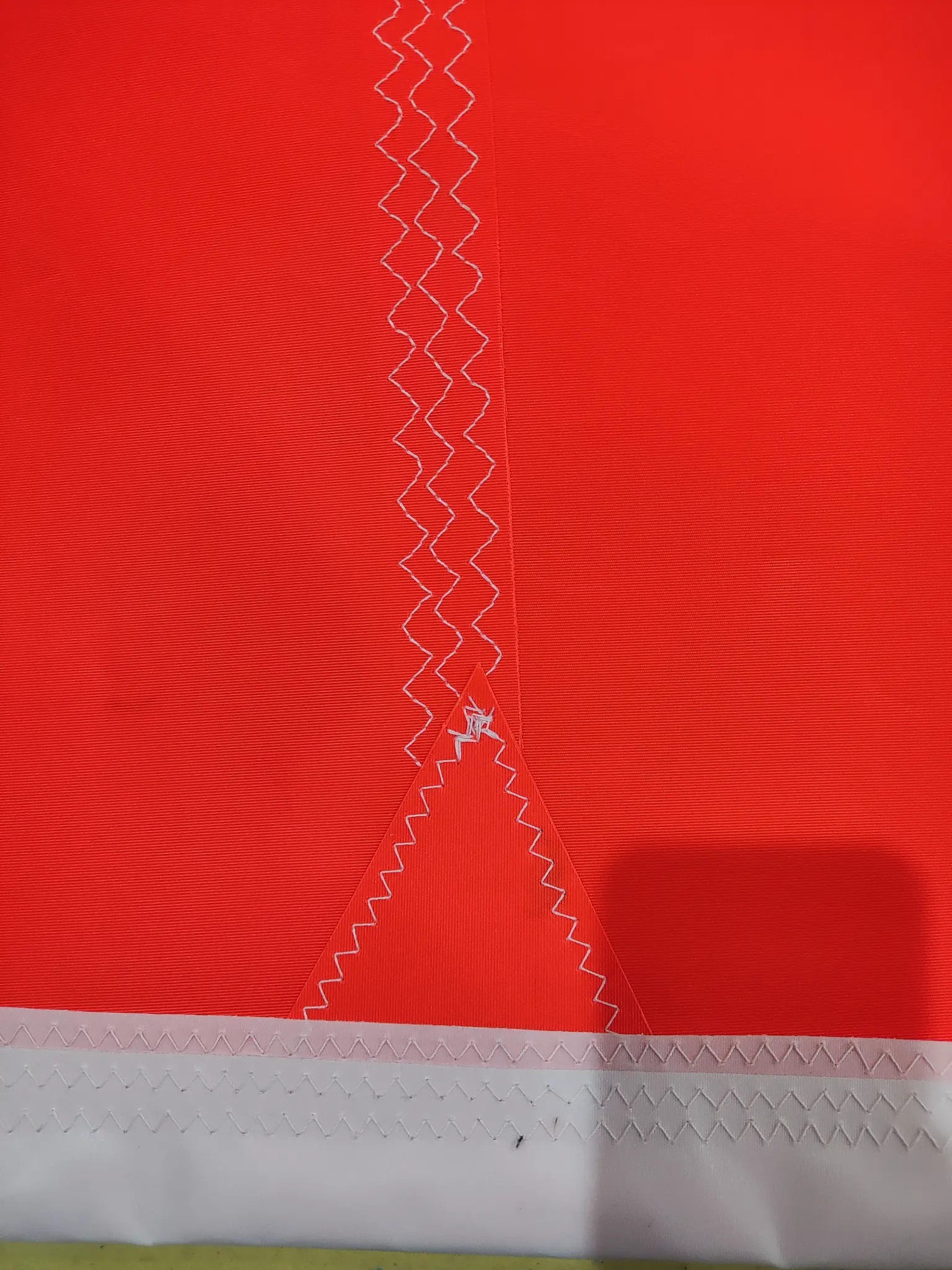
We use Challenge Storm Orange Dacron, a high-visibility woven cloth in the dayglo orange that OSR specifies for storm sails made after 2013. Visible to crew, coastguard and SAR aircraft. The colour isn’t decorative: it’s a survival feature.
OSR Colour Rule · Post-2013 Compliant
Independent Luff Attachment
Hanks and Wrap Luff attach the sail to the stay without relying on a luff groove or furling foil, as OSR 4.26 requires. Luff Tape feeds into a foil, so it does not meet that rule; choose it for coastal or training use.
OSR 4.26 · Independent of the Luff Groove
HMPE Reinforcement
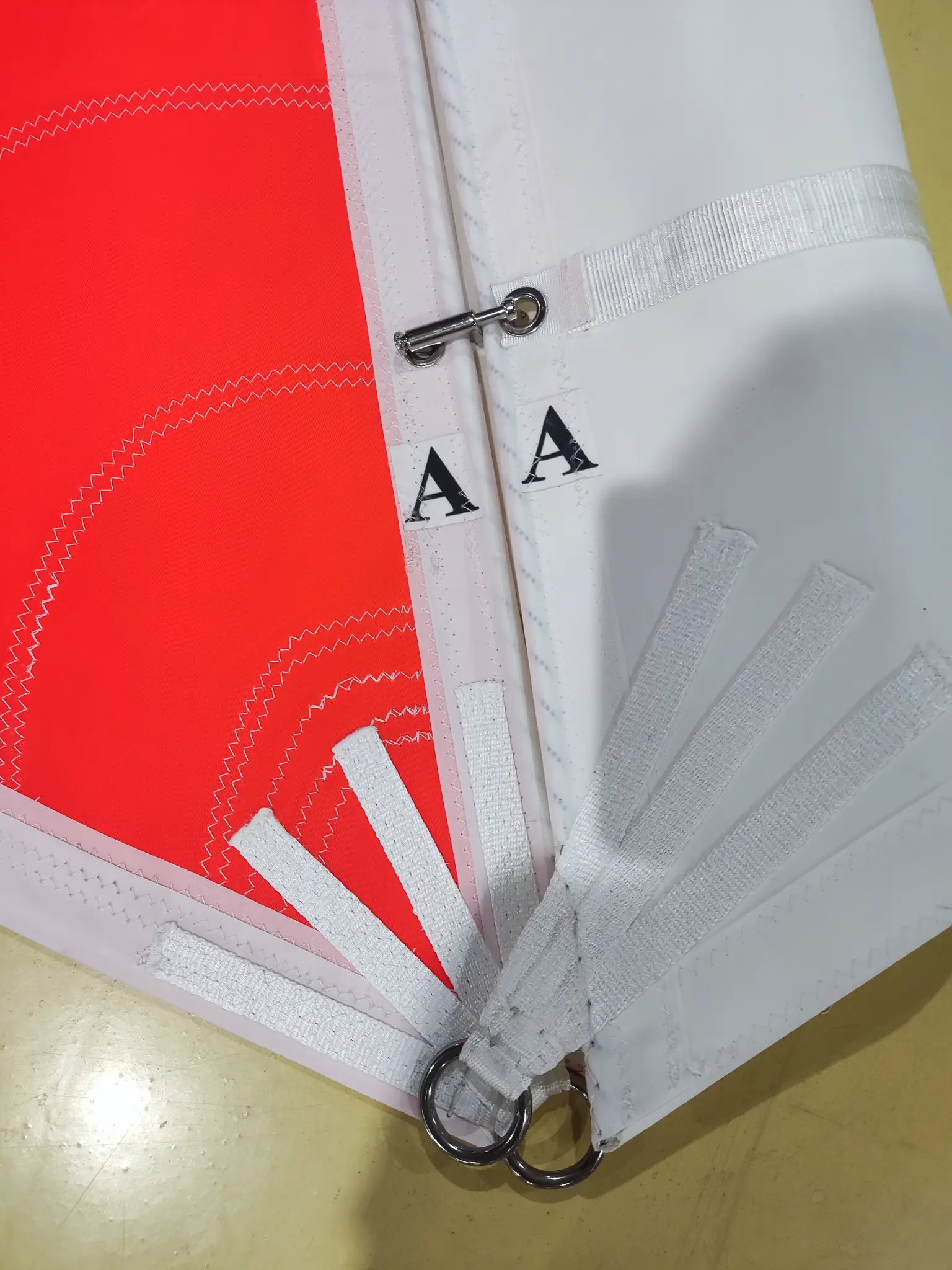
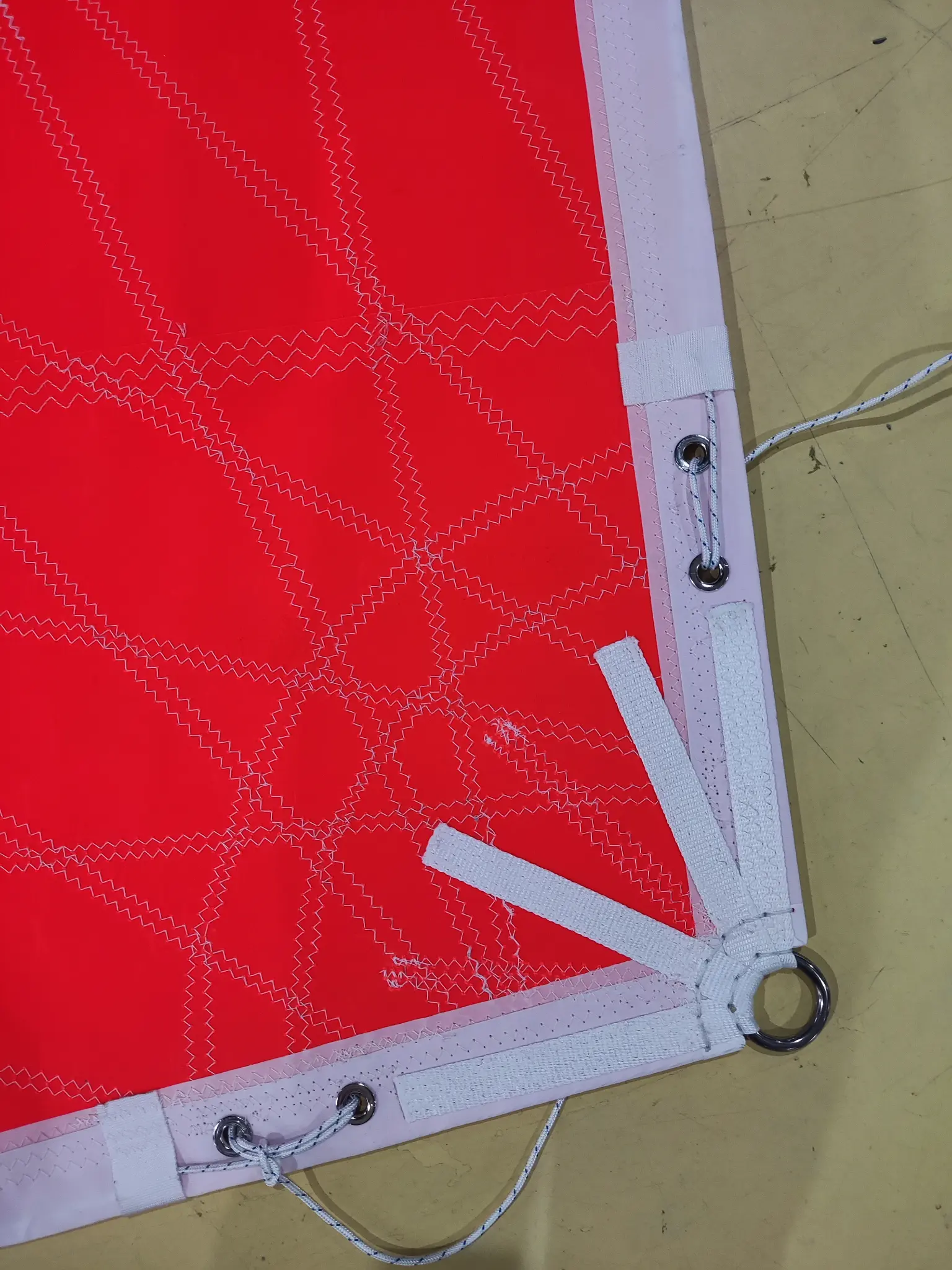
Dyneema (HMPE) is used throughout the luff rope, clew patches, tack patch, and corner load-path reinforcement. Aromatic polyamides (Kevlar) are prohibited by OSR and not used. HMPE gives exceptional strength-to-weight with excellent UV and fatigue resistance.
Dyneema SK75 Luff · OSR Materials Compliant
Wrap-Luff for Easy Hoisting
Soft wrap-luff anti-twist elements allow the storm jib to be hoisted over a fully furled headsail without snagging, critical when deploying in deteriorating conditions and the headsail is staying on the furler.